
Montreal Canadiens Masterclass: Dissecting the Game 1 Blitz of the Carolina Hurricanes

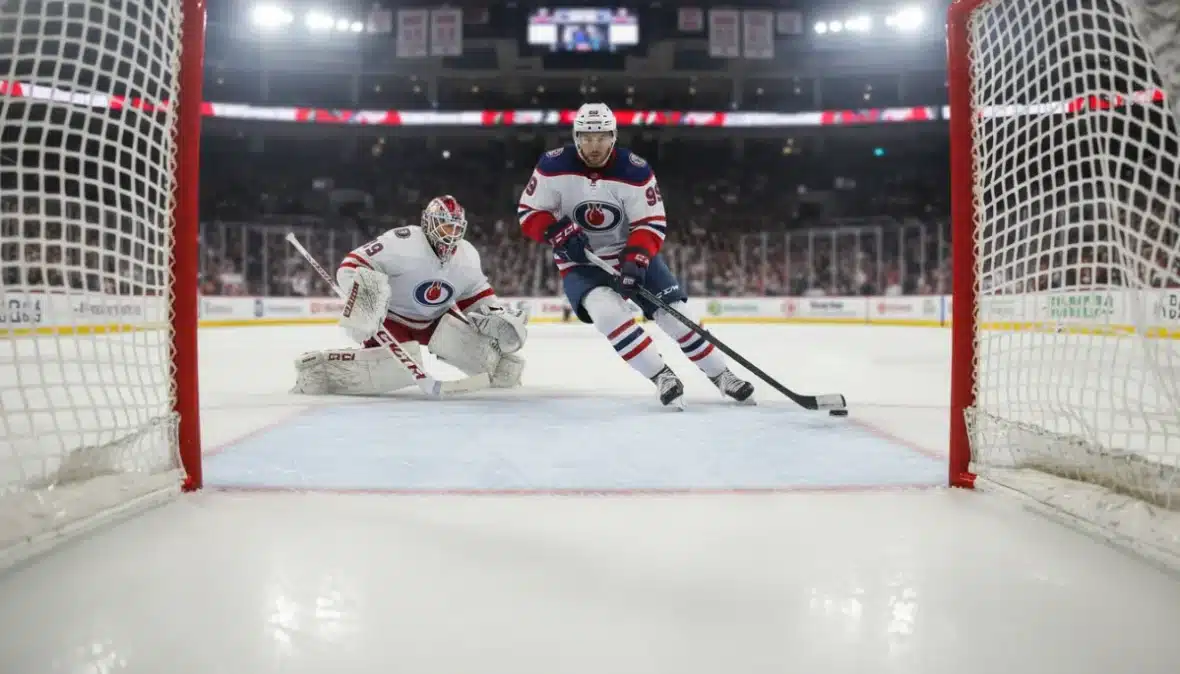
For two rounds of the 2026 Stanley Cup Playoffs, the Carolina Hurricanes looked entirely untouchable. They marched through their opponents with an unblemished 8-0 record, capturing the hockey world’s imagination with a flawless showcase of systemic perfection. Yet, as the puck dropped for Game 1 of the Eastern Conference Finals in Raleigh, North Carolina, history, rest, and expectations collided with a buzzsaw. The Montreal Canadiens, fresh off back-to-back exhausting Game 7 victories on the road, did not just defeat the top-seeded Hurricanes—they dismantled them 6-2 in a stunning, breathtaking opening frame that will be studied for years to come.
The primary narrative entering the series revolved around the classic sports dichotomy: rest versus rust. Carolina had earned themselves an unprecedented 11-day layoff, the longest postseason break for any NHL franchise since 1919. Meanwhile, the battle-tested Canadiens had been grinding through the trenches, fighting off elimination against Tampa Bay and Buffalo. Conventional wisdom suggested Montreal would eventually run out of gas against a highly conditioned, suffocating Hurricanes forecheck. Instead, the opening twenty minutes proved that momentum is a volatile entity, and rust can be a terminal affliction in May.
The First-Period Avalanche
The game began with what briefly looked like a continuation of Carolina’s dream postseason. Just 33 seconds into the first period, Seth Jarvis ignited the home crowd by beating Montreal netminder Jakub Dobes. For an ordinary team, conceding a goal in the opening minute on hostile ice after playing a grueling Game 7 less than 48 hours prior would be deflating. For this iteration of the Canadiens, it was merely a minor speed bump.
What followed was an absolute offensive clinic. Within four minutes of Jarvis’s opener, the Canadiens completely turned the tide. Cole Caufield struck first, showcasing his elite sniper instincts to pull Montreal level. Before the Hurricanes could even process the equalizer, Phillip Danault found himself on a full-speed breakaway right up the gut of the ice, expertly fed by a brilliant transition pass from Alexandre Carrier. Danault made no mistake, buried the puck past Frederik Andersen, and silenced the PNC Arena.
The onslaught didn’t stop there. Four minutes after Danault’s go-ahead marker, Alexandre Texier struck to make it 3-1. Then, the crowning moment of Montreal’s first-period masterpiece arrived courtesy of rookie sensation Ivan Demidov. Seizing another uncharacteristic Carolina turnover in the neutral zone, Demidov exploded into open ice on a breakaway. The young forward executed a flawless, dazzling forehand-backhand-forehand deke that left Andersen completely frozen, making it 4-1 just midway through the frame. Prior to Thursday night, Carolina had not allowed more than two goals in an entire game all playoffs. Montreal hung four on them in less than twelve minutes.
Tactical Breakdown: How Montreal Neutralized the Pressure
To understand how this blowout happened, one must look past the emotional narrative of “rust” and look at the tactical x’s and o’s. The Hurricanes under Rod Brind’Amour are famously built on relentless, hyper-aggressive pressure. They suffocate opponents in the offensive zone, forcing rushed decisions, winning puck battles along the wall, and heavily limiting transitional opportunities going the other way. It is a system designed to tire teams out and force errors.
Montreal’s coaching staff drew up the perfect antidote. Knowing that Carolina’s defensemen would pinch aggressively to keep pucks in the zone, Montreal emphasized rapid, tape-to-tape lateral passing to bypass the first layer of the forecheck. Once the first wave of pressure was broken, the Canadiens used the center of the ice to execute clean, structured breakouts. This left Carolina’s defensemen caught out of position, exposing massive pockets of open ice and resulting in an unprecedented number of odd-man rushes and breakaways.
“The execution was there right off the bat,” center Jake Evans later noted. While Montreal was operating with absolute precision, Carolina looked entirely out of sync. Passes fell short, defensive coverages were blown, and their top-tier players looked uncharacteristically sluggish. Hurricanes head coach Rod Brind’Amour pulled no punches in his post-game press conference: “I didn’t think we were very sharp, to put it bluntly. Our top guys had tough nights. That’s not going to work at this time of the year.”
The Goaltending Disparity
Entering the Eastern Conference Finals, Frederik Andersen was putting together a Conn Smythe-caliber postseason. He led all playoff goaltenders with an astonishing 1.12 goals-against average and a .950 save percentage. He was the backbone of Carolina’s defensive invincibility. However, hockey is a cruel game when a goaltender is left hung out to dry. Left completely unprotected by structural breakdowns in front of him, Andersen surrendered 5 goals on just 21 shots, looking human for the first time in months.
Conversely, Jakub Dobes delivered exactly what the Canadiens needed. After giving up the deflating opening goal to Jarvis, Dobes locked it down. He turned away 24 of 26 Carolina shots, anchoring the defensive unit when the Hurricanes desperately attempted to mount a comeback in the second and third periods. Dobes’s ability to maintain composure under pressure ensured that Montreal’s early lead was never in jeopardy.
Closing the Door and Looking Ahead
Though Eric Robinson managed to claw one back for Carolina, any hopes of a miraculous third-period rally were decisively crushed by Juraj Slafkovsky. The former first-overall pick put his stamp on the game by scoring twice in the final frame—his second being a late empty-netter—to put the final touches on a resounding 6-2 statement victory. Canadiens captain Nick Suzuki quietly put together a masterclass of his own, orchestrating the offense with a brilliant three-assist performance.
While Montreal fans have every reason to celebrate, the team remains hyper-aware of the opponent they are dealing with. “We knew we could come in here and try to get off to a good start to the series,” Suzuki said calmly after the game. “We’re happy with the result, but they’re definitely going to be better than what they were tonight.”
History is technically on Montreal’s side, but it also serves as a warning. Under Brind’Amour, the Hurricanes have established a bizarre, frustrating trend in the final four. They are now 1-13 all-time in Eastern Conference Finals games under his tenure, a stretch that includes devastating sweeps by Boston in 2019 and Florida in 2023. Game 1’s outcome also mirrored the Western Conference Finals opener, where the Vegas Golden Knights went on the road to upset the Colorado Avalanche, meaning both Stanley Cup favorites dropped Game 1 on home ice.
The Hurricanes are a proud, deeply disciplined team that will undoubtedly make major structural adjustments ahead of Game 2 on Saturday night. But for now, the Montreal Canadiens have proven that they aren’t just lucky to be here—they are a legitimate threat to lift the Cup.
